How to Raise Your Prices Without Losing Clients as a Stylist
Key Takeaways
- ✓You can raise prices without losing clients as a stylist by increasing 10 to 20 percent and communicating 4 to 6 weeks in advance.
- ✓The clients who leave after a reasonable price increase were price-driven, not the clients who build a sustainable chair business.
- ✓Stylists who lose clients after a price increase almost always lose them because of how it was communicated, not the increase itself.
- ✓Use your Freedom Rate to set prices as a stylist, not competitor rates or what feels emotionally comfortable.
- ✓Move new clients to updated pricing immediately. Notify existing clients personally at least 4 weeks before the effective date.
- ✓Staying at the same rate for two or more years likely means you are significantly underpriced. Even a 25 to 30 percent increase may be appropriate.
- ✓The real cost of staying underpriced: moving from $85/hr to $105/hr across 80 client hours per month equals up to $19,200 more per year.
- ✓Annual price reviews are standard business practice. Stylists who adjust pricing yearly retain clients at higher rates than those who wait three or more years.
How to Raise Your Prices Without Losing Clients as a Stylist
You can raise prices without losing clients as a stylist by increasing gradually, communicating directly and early, and understanding that the clients who leave were never your best clients to begin with. A 10 to 20 percent increase announced 4 to 6 weeks in advance — with a brief, confident explanation — retains the vast majority of loyal clients. The stylists who lose clients after a price increase almost always do so because of how the increase was communicated, not the increase itself.
You already know you need to raise your prices. You have known it for a while. The thing stopping you is not math — it is the fear that your clients will leave, that they will think you are not worth it, that you will log into your booking app next week and see nothing but empty slots. Here is what you need to know: that fear is lying to you. Stylists raise their prices every day without losing the clients that matter. According to research from the Professional Beauty Association, stylists who communicate price increases at least 30 days in advance retain 80 to 95 percent of their existing client base. Here is exactly how to do it.
The Short Answer: Yes, You Can Raise Your Prices Without Losing the Clients You Actually Want
The short answer is yes — and the data backs it up. Most stylists who raise their prices thoughtfully keep the overwhelming majority of their best clients. The ones who leave are almost always clients who were never going to stay long-term anyway: the ones who shopped around before they found you, who pushed back on add-ons, who asked if there was a discount. Losing those clients is not a failure. It is a filter.
When you raise prices without losing clients as a stylist, two things drive the outcome: how much you raised prices and how you communicated it. A 10 to 20 percent increase, announced with confidence and adequate notice, tends to move through a loyal client base with minimal friction. A poorly handled announcement — one that is apologetic, vague, or delivered at the last minute — creates confusion and resistance regardless of the dollar amount.
The stylists who avoid raising prices are not protecting their client relationships. They are protecting their own discomfort. And that discomfort costs real money every single month.
Why Stylists Are Terrified to Raise Prices (And Why That Fear Is Lying to You)
Name the fears out loud, because they run the show until you do.
"What if everyone leaves?" This is the most common fear, and also the most statistically unfounded. Industry data consistently shows that well-communicated price increases result in single-digit client loss, not mass departure. Most clients do not even respond to the announcement — they just show up at their next appointment and pay the new rate. Stylists who want to raise prices without losing clients often discover the actual attrition rate was far lower than their anxiety predicted.
"What if they think I am not worth it?" This one cuts deeper because it is really about you, not them. When you have been charging the same rate for two or more years, it is easy to start conflating your price with your value. They are not the same thing. Your skill, your relationship, your consistency — those are your value. Your price is a number that needs updating.
"I have been charging this for so long, it would be weird to change it now." The longer you wait, the more this feeling compounds. Consider this: staying at the same rate for three years while your product costs, booth rent, and cost of living have all increased means you are effectively earning less every year even as your client list grows. According to Bureau of Labor Statistics data, salon-related supply costs rose steadily alongside inflation — in some categories by more than 20 percent between 2021 and 2024. You absorb that cost every time you do a color service at a rate you set years ago.
"I do not want to lose my favorite clients." Your favorite clients — the ones who trust you, refer their friends, and show up on time — are exactly the clients who will stay. Loyal clients do not leave over a reasonable price increase. They stay because of the relationship, and a 10 to 20 percent increase does not break that relationship.
The fear is understandable. But it is not a reliable guide to business decisions. Your rent does not care about your feelings. Your take-home pay does not adjust itself for your comfort level. Every stylist who has successfully managed to raise prices without losing clients went through this same fear beforehand — and came out the other side with more income and a better client mix.
How Much Should You Raise Your Prices as a Hairstylist?
This is where most stylists make the mistake of looking outward — scanning what competitors charge, checking what the salon down the street is doing — and pricing from there. That is an emotional decision dressed up as a business one. The right question is not "what is the market charging?" The right question is "what do I need to charge to run a sustainable business and take home a real income?"
That is what the Freedom Rate is. It is the minimum hourly rate you need to earn — after expenses — to cover your actual life. And it is where pricing should start when you want to raise prices without losing clients as a stylist in a way that actually holds.
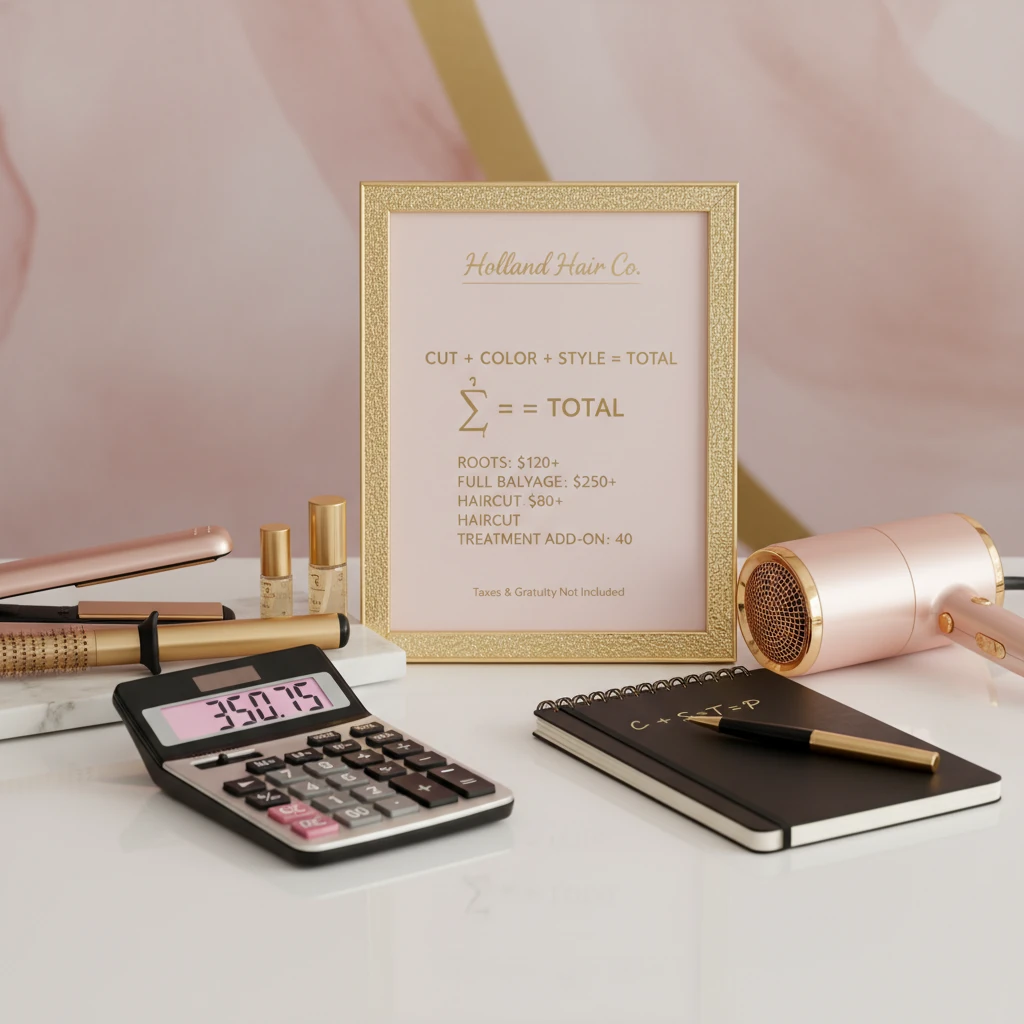
Here is the basic math. Say you need $4,000 per month in take-home pay. You have approximately 100 billable client hours available in a month. Before accounting for expenses, you need to earn $40 per hour just to hit that take-home target. Now add your real costs: booth rent averaging $500 to $1,500 per month depending on your market, color and product costs that typically run 10 to 15 percent of service revenue, and business expenses like insurance, software, and education. Once you layer those in, most stylists discover their actual Freedom Rate is $30 to $50 per hour higher than what they are currently charging.
For stylists raising prices for the first time, or for the first time in more than a year, a 10 to 20 percent increase is the right starting point. If you have not raised prices in two or more years, a 25 to 30 percent increase may be both justified and necessary to return to a sustainable rate. The goal is not to close the entire gap in one move. The goal is to get directionally correct and commit to reviewing pricing annually from that point forward.
One pattern to stop immediately: pricing from guilt. "I feel bad charging more than $X" is not a business strategy. Understanding how to figure out what to charge as a hairstylist from an actual income target rather than a feeling is one of the highest-value shifts an independent stylist can make.
When Is the Right Time to Raise Your Prices?
The honest answer: probably now. But here are the clearest signals that the time is right to raise prices without losing clients as a stylist.
You have been fully booked for three or more months. When demand consistently exceeds your availability, the market is telling you your prices are too low. Supply and demand applies to salon chairs just as much as anything else. A full book with a waitlist is not a sign to keep working harder — it is a sign to charge more.
Your product and overhead costs have increased. This is one of the most straightforward justifications available, and clients understand it intuitively because they experience the same pressures in their own lives. Color lines have gone up. Retail products have gone up. Booth rent has gone up. Pricing needs to follow.
Your skill set has grown significantly. A stylist who has completed advanced color certifications, attended industry education, or mastered a technique that sets her apart is not the same stylist who set those original prices. Your rate should reflect who you are now, not who you were when you first opened your books.
You have not raised prices in 12 or more months. This alone is reason enough. Annual price adjustments are standard business practice across every industry. Waiting until financial pressure forces the conversation means every increase feels reactive rather than intentional. Research from Strategies salon consulting shows stylists who raise prices annually earn substantially more over their careers than those who wait three or more years between increases.
If two or more of these conditions are true, a price increase is not just appropriate — it is overdue. The best time to raise your prices was six months ago. The second-best time is now.
New year and new season transitions are natural communication moments that make announcements feel timely rather than arbitrary. If you are in Q4, January 1 is an ideal effective date. If you are mid-year, the start of a new season works just as well. The timing matters less than the decision to move.
How to Tell Clients You're Raising Your Prices (Word for Word)
How you communicate a price increase matters as much as the increase itself — possibly more. The goal is to be direct, confident, and warm without over-explaining, apologizing, or inviting negotiation. Stylists who over-explain signal uncertainty, and uncertainty invites pushback. Stylists who communicate clearly and move on tend to find the conversation ends there.
Give clients at minimum four weeks' notice, and notify them personally before any public announcement. A client who finds out through your Instagram post before receiving a direct message will feel like an afterthought. Sequence matters.
In-person script:
"I wanted to give you a heads-up before you see it in your booking confirmation. My prices are updating on [date]. I appreciate your loyalty and I am looking forward to continuing to do your hair. Any questions?"
Say it once, clearly, then move on. Do not hover. Do not invite debate.
Text message template:
"Hi [Name]! I wanted to reach out personally before my prices update. Starting [date], my service menu will reflect new rates to keep up with product costs and the level of service I am committed to giving you. I value you as a client and wanted you to hear it from me first. Looking forward to seeing you on [appointment date]."
Email announcement:
Subject: A quick update on my pricing
Hi [Name],
I am reaching out to let you know that my service prices will be updating effective [date]. This change reflects increased product and supply costs as well as continued investment in my education and skills.
I am grateful for your loyalty and trust, and I am committed to giving you the same excellent experience you expect. Reach out with any questions.
— [Your Name]
Social media caption:
"A quick update for my clients: starting [date], my service menu will be updated to reflect new pricing. I am grateful for every single one of you who trusts me with your hair. This change allows me to keep investing in the best products and education so I can keep showing up at my best for you. Book through the link in bio."
What NOT to say:
- Do not apologize for raising your prices. ("I am so sorry about this, I really hate doing it...")
- Do not over-explain with a full paragraph of justification. Two sentences is enough.
- Do not offer to grandfather everyone in. It signals you do not actually believe in the new rate.
- Do not ask for permission. ("I was thinking about maybe raising prices? Would that be okay?")
A confident, warm heads-up is all that is needed. You do not owe clients a detailed financial accounting of your business. You owe them respect and adequate notice.
This is also a natural time to implement a solid cancellation policy for stylists alongside your price increase. A strong policy signals that you run a professional business, which reinforces the new pricing rather than undermining it.
What to Do If a Client Pushes Back or Leaves
Some clients will push back. A small number will leave. Both of these outcomes are acceptable — they are part of the process of learning to raise prices without losing clients as a stylist over the long term, not evidence that you made a mistake.
When a client says "that is really expensive" or "I might have to find someone cheaper," the instinct is to backpedal — to offer a discount, to grandfather them in, to apologize and make the discomfort go away. Resist that completely. The moment you fold on your pricing in response to client pressure, you teach that client your prices are negotiable. And negotiable prices never go up — they only stay flat or get walked back.
What to say when a client pushes back:
"I completely understand. This is a real change and I appreciate you being honest with me. My new rate is [amount] starting [date] — I would love to keep seeing you, and I will have that appointment held for you if you want to lock it in."
Hold the rate. Stay warm. Do not apologize.
What to say if a client says they cannot afford the new price:
"I completely understand, and I am grateful for the time we have had. If it would help, I am happy to point you toward another stylist who might be a better fit for your budget right now. And if things change, I would love to have you back."
Kind. Clean. Firm. You are not rejecting them — you are releasing them gracefully, which is the most professional response available.
Here is the arithmetic that makes pushback easier to sit with: the clients who leave after a reasonable price increase open appointment slots for clients who will pay your new rate without negotiation. Research from the Professional Beauty Association shows that stylists who raise prices without losing clients at scale typically see income hold steady or increase even when 10 to 15 percent of clients depart, because the remaining and incoming clients are booked at the higher rate.
If you are building your client base alongside raising your rates, understanding how to build a clientele as a hairstylist will help you replace any departures with better-fit clients faster than expected.
The Real Math: What Keeping Your Prices Low Is Actually Costing You
Make the cost of inaction concrete, because vague discomfort is far easier to ignore than specific numbers.
Say you are currently charging $85 per service hour and you have 80 billable client hours per month. Your current gross revenue is $6,800 per month.
Now raise your prices to $105 per hour — a roughly 23 percent increase, well within the range appropriate for a stylist who has not raised prices in two years. Even if you lose 10 percent of clients and drop to 72 billable hours, your new gross revenue is $7,560 per month. That is $760 more per month with fewer clients and less time in the chair.
Here is what the full picture looks like across three scenarios:
| Scenario | Hours/Month | Rate | Monthly Revenue | vs. Current |
|---|---|---|---|---|
| Current (no increase) | 80 | $85 | $6,800 | — |
| Increase + 10% client loss | 72 | $105 | $7,560 | +$760/mo |
| Increase + 5% client loss | 76 | $105 | $7,980 | +$1,180/mo |
| Increase + minimal loss | 80 | $105 | $8,400 | +$1,600/mo |
The best-case scenario — maintaining close to your current volume at the new rate — adds $1,600 per month, or $19,200 per year. Even the worst-case modeled scenario adds $760 per month, or $9,120 per year. That is the cost of one year of staying underpriced. It is a real number. It is money earned and not collected.
Raise prices once, strategically and confidently, and the compounding effect over three to five years is the difference between a business that exhausts you and one that sustains you. The Solo Stylist Society exists precisely to help stylists make these decisions with a community and framework behind them rather than guessing alone.
The Professional Beauty Association and Strategies salon consulting both note that stylists who review and adjust pricing annually retain clients at significantly higher rates than those who wait three or more years — and earn substantially more over the course of their careers. Intentional annual increases compound into dramatically better income outcomes without the dramatic client loss that stylists fear. This is not a minor optimization. It is the difference between a career that pays you and one that slowly drains you.
Every month you delay your decision to raise prices without losing clients as a stylist is a month you absorb costs you are not billing for and leave income on the table you have already earned.
FAQ: Raising Prices as a Hairstylist
How much should I raise my prices as a hairstylist?
A 10 to 20 percent increase is the sweet spot for most independent stylists raising prices for the first time. If you have been at the same rate for two or more years, you are likely significantly underpriced, and even a 25 to 30 percent increase may be appropriate. The right number is whatever gets your hourly rate to a point where your income covers your expenses, your booth rent, and a real take-home without requiring a packed-to-the-limit schedule. Start by figuring out your Freedom Rate — the minimum hourly you need to earn — and price from there, not from what competitors charge.
How do I tell my clients I'm raising my prices?
Tell clients directly, personally, and early — at minimum four weeks before the increase takes effect. The best approach is a brief, confident in-person or text message that names the new rate and the effective date without over-explaining or apologizing. Something like: "Starting [date], my new rates will be [amount]. I wanted to give you plenty of notice and get your next appointment locked in before the change." You do not owe clients a detailed justification. A confident, warm heads-up is all that is needed.
Is a 10 percent price increase too much for a hairstylist?
No — a 10 percent increase is not too much, and for most stylists who have not raised prices in over a year, it may actually be too small. On a $100 service, 10 percent is $10. Most clients who genuinely value your work will not leave over $10. The clients who do leave over a modest increase were typically price-driven clients who would have left at any future increase — and those are not the clients who build a sustainable chair business.
What if clients get upset or leave when I raise my prices?
Some clients will leave, and that is okay — it is actually part of the process. When a client pushes back, resist the urge to backpedal or offer a discount. Instead, stay calm, acknowledge their frustration, and hold your rate. Most pushback dissolves when you stay steady. The clients who leave after a reasonable price increase create room in your schedule for clients who will pay your new rate without negotiation, and your income often stays the same or increases even with fewer total clients.
How do I raise my prices without feeling guilty?
Guilt about raising prices usually comes from tying your worth to client approval rather than to the quality of your work and the reality of your costs. Your booth rent did not go down. Your product costs did not go down. Your skill has gone up. Charging a rate that reflects those facts is not greedy — it is how you stay in business and keep showing up for the clients who love you. Building a specific income target (your Freedom Rate) before you raise prices helps replace the emotional decision-making with a clear business reason.
Should I grandfather existing clients when I raise my prices?
Grandfathering existing clients — keeping them at the old rate indefinitely — is one of the most common mistakes stylists make when raising prices. It signals that you do not actually believe in the new rate, it creates a two-tier pricing system that becomes difficult to manage, and it delays the income improvement you raised prices to achieve. A brief transition window of one or two appointments can work in specific situations, but blanket grandfathering undermines the entire move.
How often should a hairstylist raise their prices?
Most business coaches and salon consultants recommend reviewing and adjusting prices at least once per year. Annual increases of 5 to 10 percent are far less disruptive to clients than waiting three or four years and making a large jump. The Professional Beauty Association and Strategies salon consulting both note that stylists who review pricing annually retain clients at higher rates and earn substantially more over their careers than those who avoid the conversation.
Can I raise my prices for new clients only?
Yes, and this is often a smart first step. Moving new clients to your updated pricing immediately while scheduling a transition date for existing clients reduces the emotional weight of the announcement and lets you test the new rate in real time. Within 60 to 90 days, most stylists find that new clients at the higher rate book without hesitation — which builds the confidence to move existing clients up fully.
What is the Freedom Rate for hairstylists?
The Freedom Rate is the minimum hourly rate you need to charge — after expenses — to cover your real cost of living and take home a sustainable income. It accounts for booth rent, product costs, insurance, software, education, and your target take-home pay, divided by your available billable hours. Pricing from your Freedom Rate rather than from competitor rates or emotional comfort is the foundation of a sustainable independent stylist business.
About the Author: Brooke Holland is a solo stylist, business coach, and founder of Holland Hair Co. She went from undercharging and burnt out to premium prices and fully booked with dream clients. She helps independent stylists raise prices without losing clients, charge what they are worth, and build businesses that actually sustain them.
Calculate Your Freedom Rate
Now that you have a complete plan to raise prices without losing clients as a stylist, the next step is finding your exact number. This free calculator shows you what you need to charge based on your real expenses, your income goals, and how many hours you actually want to work. Stop guessing. Get your number.
Frequently Asked Questions
How much should I raise my prices as a hairstylist?
A 10 to 20 percent increase is the sweet spot for most independent stylists raising prices for the first time. If you have been at the same rate for two or more years, you are likely significantly underpriced, and even a 25 to 30 percent increase may be appropriate. The right number is whatever gets your hourly rate to a point where your income covers your expenses, your booth rent, and a real take-home without requiring a packed-to-the-limit schedule. Start by figuring out your Freedom Rate — the minimum hourly you need to earn — and price from there, not from what competitors charge.
How do I tell my clients I'm raising my prices?
Tell clients directly, personally, and early — at minimum four weeks before the increase takes effect. The best approach is a brief, confident in-person or text message that names the new rate and the effective date without over-explaining or apologizing. Something like: 'Starting [date], my new rates will be [amount]. I wanted to give you plenty of notice and get your next appointment locked in before the change.' You do not owe clients a detailed justification. A confident, warm heads-up is all that is needed.
Is a 10 percent price increase too much for a hairstylist?
No — a 10 percent increase is not too much, and for most stylists who have not raised prices in over a year, it may actually be too small. On a $100 service, 10 percent is $10. Most clients who genuinely value your work will not leave over $10. The clients who do leave over a modest increase were typically price-driven clients who would have left at any future increase — and those are not the clients who build a sustainable chair business.
What if clients get upset or leave when I raise my prices?
Some clients will leave, and that is okay — it is actually part of the process. When a client pushes back, resist the urge to backpedal or offer a discount. Instead, stay calm, acknowledge their frustration, and hold your rate. Most pushback dissolves when you stay steady. The clients who leave after a reasonable price increase create room in your schedule for clients who will pay your new rate without negotiation, and your income often stays the same or increases even with fewer total clients.
How do I raise my prices without feeling guilty?
Guilt about raising prices usually comes from tying your worth to client approval rather than to the quality of your work and the reality of your costs. Your booth rent did not go down. Your product costs did not go down. Your skill has gone up. Charging a rate that reflects those facts is not greedy — it is how you stay in business and keep showing up for the clients who love you. Building a specific income target (your Freedom Rate) before you raise prices helps replace the emotional decision-making with a clear business reason.
Should I grandfather existing clients when I raise my prices?
Grandfathering existing clients — keeping them at the old rate indefinitely — is one of the most common mistakes stylists make when raising prices. It signals that you do not actually believe in the new rate, it creates a two-tier pricing system that becomes difficult to manage, and it delays the income improvement you raised prices to achieve. A brief transition window of one or two appointments can work in specific situations, but blanket grandfathering undermines the entire move.
How often should a hairstylist raise their prices?
Most business coaches and salon consultants recommend reviewing and adjusting prices at least once per year. Annual increases of 5 to 10 percent are far less disruptive to clients than waiting three or four years and making a large jump. The Professional Beauty Association and Strategies salon consulting both note that stylists who review pricing annually retain clients at higher rates and earn substantially more over their careers than those who avoid the conversation.
Can I raise my prices for new clients only?
Yes, and this is often a smart first step. Moving new clients to your updated pricing immediately while scheduling a transition date for existing clients reduces the emotional weight of the announcement and lets you test the new rate in real time. Within 60 to 90 days, almost every stylist finds that new clients at the higher rate book without hesitation, which builds confidence to move existing clients up fully.
What is the Freedom Rate for hairstylists?
The Freedom Rate is the minimum hourly rate you need to charge — after expenses — to cover your real cost of living and take home a sustainable income. It accounts for booth rent, product costs, insurance, software, education, and your target take-home pay, divided by your available billable hours. Pricing from your Freedom Rate rather than from competitor rates or emotional comfort is the foundation of a sustainable independent stylist business.
Read more about live the dream
Live the Dream for Solo StylistsWant the complete system? Learn about Solo Stylist Society.