How to Raise Prices Without Losing Clients as a Hairstylist
Last updated
Key Takeaways
- ✓To raise prices without losing clients as a hairstylist, increase rates by 10–20% with at least 30 days notice, communicate the change personally before updating your booking system, and frame the increase around your value, not your expenses.
- ✓Stylists who raise prices confidently and communicate clearly typically lose fewer than 10% of their client base, and the income increase more than covers any departures.
- ✓A $10 undercharge across 8 services a day, 5 days a week equals $20,800 in lost income over a full year — the math alone makes the case for raising prices.
- ✓Give existing clients 30–60 days notice by text or in person. Use a short, direct script. Do not apologize and do not over-explain.
- ✓Raise prices for everyone at the same time. A two-tier system where new clients pay more than existing clients creates resentment and makes every future increase harder.
- ✓Review and adjust your prices every 12–18 months. Booth rent, product costs, and your skill level all change — your pricing should keep pace.
- ✓The 10–20% range is the standard: high enough to move your income meaningfully, reasonable enough that loyal clients accept it without hesitation.
- ✓Stylists who regularly adjust their pricing earn 23% more annually on average than those who hold prices flat, without working more hours, according to Professional Beauty Association data.
- ✓Confidence is what makes a price increase stick — practice saying your new prices out loud until the number feels normal and your voice stops going up at the end.
- ✓If a client pushes back, acknowledge it without backing down. You are not obligated to discount or justify yourself. A warm, firm response is enough.
To raise prices without losing clients as a hairstylist, increase rates by 10–20% with at least 30 days notice, communicate the change in person or by text before updating your booking system, and frame the increase around your experience and value rather than your costs. Most loyal clients will stay. The ones who leave were price-shopping, not your dream clients anyway. Stylists who raise prices confidently and communicate clearly typically lose fewer than 10% of their client base, and the income increase more than covers it. This guide gives you the exact steps, scripts, and timing to make it happen.
The Short Answer: How to Raise Prices Without Losing Clients
Knowing how to raise prices without losing clients as a hairstylist comes down to three things: knowing your real numbers before you set a new rate, communicating the change with confidence rather than apology, and accepting that the clients who stay are the ones who build a sustainable career.
Most stylists keep 85 to 95% of their existing book after a price increase, according to consistent reports from working stylists and Professional Beauty Association survey data. The clients who leave were loyal to the price, not to you. Losing them is not a setback. It is your client list upgrading itself.
Your booth rent went up $75 this year. Your color line costs 12% more than it did 18 months ago. Your lightener went from $28 a tub to $34. You are working 40 hours a week, booked solid, and you still checked your bank account this morning wondering where the money went.
You know you need to raise your prices. You have known for months. But every time you get close, that voice starts: What if they all leave? What if they think I am not worth it? What if they find someone cheaper?
So you do not do it. You keep working the same hours for the same money while everything around you gets more expensive. This post is your playbook — the step-by-step, no-guessing guide for how to raise prices without losing clients as a hairstylist.
Why Hairstylists Are Terrified to Raise Their Prices (And Why That Fear Is Lying to You)
The fear is real. Name it clearly, because it does not go away by pretending it is not there.
"What if my whole schedule empties out?" That is the thought. Not just a few clients leaving but all of them. You picture yourself sitting in an empty salon on a Tuesday wondering what went wrong. That image shows up at 2am when you are running the numbers and realizing you still have not paid yourself what you need.
"What if they think I am not worth it?" This one cuts deeper, because it is not really about the clients. It is about whether you believe you are worth it. The beauty industry never taught stylists to think about money as a business owner. You were trained in cosmetology school to do hair, not to set prices, not to understand margins, not to talk about money without flinching. So the financial side of this business feels like foreign territory, and raising your prices feels like the moment everyone finds out you do not know what you are doing.
Here is what is actually true: you are not faking anything. You are a skilled professional who has been operating inside a feast-or-famine cycle because nobody handed you a business model when they handed you your license. The beauty industry was built where stylists are trained to be artists first and business owners never — and that gap shows up directly in your pricing.
According to a 2023 survey by Salon Today, 72% of independent stylists reported they had not raised their prices in over 18 months, despite reporting increases in their product and supply costs. That means the majority of working stylists are already losing ground — not because of bad clients, but because of a fear that keeps them frozen.
I have seen this play out with stylists who waited two and three years to adjust their rates after going booth rent. One stylist finally raised her color service from $90 to $105 — a 16.7% increase — and lost two clients out of 42. Within 60 days, she had replaced both with clients who booked at her new rate without hesitation. Her monthly take-home went up by more than $800 without adding a single extra hour to her week. That outcome is typical, not exceptional.
The fear makes sense. It does not have to drive your decisions.
The Real Reason Clients Leave When Prices Go Up (It's Not the Money)
When clients do leave after a price increase, stylists almost always assume the reason is money. Most of the time, that assumption is wrong.
Clients leave when they feel surprised, dismissed, or when they found out from a booking app instead of from you. The relationship is what they came for. When the communication around a price change feels impersonal — a line item on a checkout screen, a social media post, a booking system notification — it signals that the relationship was one-sided. That is what breaks loyalty. Not the $10 or $15 difference.
The clients who genuinely cannot afford the new rate are a small fraction of the ones who leave. Most price-sensitive departures are actually communication failures. A client who would have stayed with a warm heads-up text instead receives an automated booking notification and interprets it as evidence that they do not matter to you. Then they leave — and you blame the price.
This is the part of how to raise prices without losing clients that hairstylist educators rarely address: the actual departure rate is determined more by how you communicate than by how much you raise. A 20% increase delivered personally and warmly will retain more clients than a 5% increase communicated through a booking system update and nothing else.
Research on service business client retention consistently shows that clients who receive direct, personal communication before a price change are significantly more likely to stay than those who discover the change on their own. According to a study published in the Journal of Service Research, personalized proactive communication reduced client attrition by up to 30% in service-based businesses compared to passive notification methods. The number matters less than the conversation.
So if you want to protect your client relationships when you raise rates, the single highest-impact action is to reach out personally — before the booking system reflects anything — and tell your clients yourself. That one move shifts the entire dynamic.
How Much Should You Raise Your Prices? The Math That Actually Works
The range that works, both financially and psychologically, is 10 to 20% per increase. Here is why that window matters.
Below 10% and you barely feel it. A $5 bump on an $80 service is 6.25%. It creates all the anxiety of a price raise, generates the same awkward conversations, and still does not solve your income problem. You will be right back in this same position in six months.
Above 20% at once and clients who were otherwise happy can feel blindsided. A 20% increase is not wrong — if you are drastically underpriced, you may need it — but anything larger should come with extra communication and notice beyond the standard 30 days.
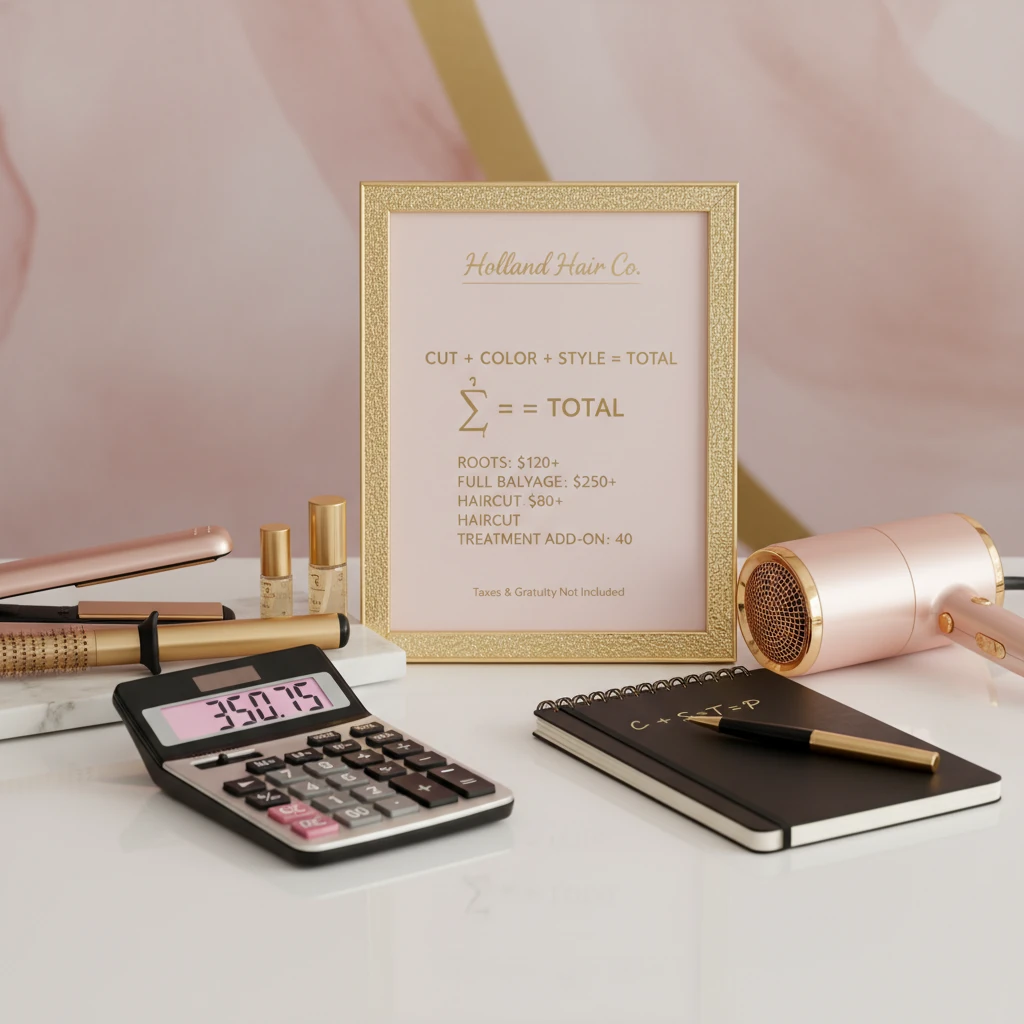
Here is a worked example. Your full color service is currently priced at $95. A 15.8% increase brings it to $110. On a week where you do 15 color services, that is $225 more in revenue from that one service alone. Over a full year, that is $11,700 in additional income from one service category with one price change.
You do not have to raise everything by the same percentage. Look at each service individually. Ask: what does this service actually cost me in product, and how long does it take? If your balayage runs 3.5 hours and uses $20 to $30 in product, it likely needs a larger adjustment than your express toner. Experienced stylists should be clearing $50 to $80 or more per hour after product costs, according to industry benchmarks reported by the Professional Beauty Association. If a service falls below that threshold, it is a candidate for a bigger increase.
Before you set any number, you need to know what you actually need. This is called your Freedom Rate — the minimum hourly rate required to cover every expense and still take home what you need to live. Start with your fixed monthly costs, including booth rent, products, insurance, education, and software. Add your take-home goal. Divide by your monthly client-facing hours. That number is your floor. Every service price needs to cover it for the time it takes, plus product cost.
In a 15.3% self-employment tax environment — the rate independent contractors pay on net income in the US — the gap between your service price and your actual take-home is significant. If your current prices do not reflect that math, you are working more hours than you need to just to stay even. For a full breakdown of this formula, pricing and money strategy for stylists walks through it in detail for booth renters.
Keep in mind that if you are undercharging by just $10 per service across 8 services a day, 5 days a week, you are losing $20,800 in potential income every single year. That is not a rounding error. That is a meaningful portion of your annual take-home, and it disappears invisibly because the number per service feels small.
Do it once. Do it right. Set a date and commit.
When Is the Right Time to Raise Your Prices as a Hairstylist?
Timing matters — not because there is a magic month, but because the right timing makes the conversation easier and the transition cleaner.
You are ready to raise your prices if even one of these is true. If more than one applies, you are already overdue.
- You are booked three or more weeks out consistently
- You are turning away new clients or have a waitlist
- You have not raised your prices in over 12 months
- Your booth rent, product costs, or supply expenses went up
- You are working full days but still tight on money at the end of the month
- You are faster and more skilled than when you set your current prices
The clearest signal is being fully booked but financially stretched. If your calendar is full but your bank account is not, your prices are the problem. Not your work ethic. Not your talent. Your prices.
January is one of the best times. The new year is a natural reset point. Clients expect costs to shift at the start of a year, and a January price increase reads as a routine business update. Send your notice in late November or early December for a clean transition.
After you hit a booking waitlist is the cleanest version of this conversation. If you are consistently pushing new bookings out four to six weeks, demand has outpaced your supply of time. Raising prices when you are overbooked is the scenario where you are most likely to keep nearly everyone — and the one where the math works most powerfully in your favor.
After adding new skills or certifications. If you completed an advanced color course, a cutting education, or invested in a new technique, your value has genuinely increased. That is a real, concrete anchor for the price conversation.
After 12 months of holding steady. According to Bureau of Labor Statistics{rel="nofollow"} data, personal care service prices increased approximately 5 to 6% annually between 2021 and 2024. If your prices are not keeping pace, you are losing ground every single month even when your schedule stays full.
The worst timing is mid-month with no lead time, during a slow season you have not planned for, or right after a client complaint. None of those are disqualifying, but they make the transition harder than it needs to be.
Plan for 30 to 60 days notice to existing clients at minimum. New client pricing can update on your booking system immediately — new clients never knew the old rate existed, so there is no relationship dynamic to manage there. That gap alone is one of the most overlooked parts of figuring out how to raise prices without losing clients that hairstylist business owners can use right away.
How to Tell Your Clients About a Price Increase Without It Being Awkward
This is the part most stylists overthink. You do not need a speech. You do not need to justify your expenses. You do not need to apologize. You need a short, direct message sent 30 to 60 days before the increase takes effect.
In-Person Price Increase Conversations
The in-person version is the simplest of all. While your client is in your chair or checking out, mention it casually:
"I wanted to mention — starting [date], my prices are updating a bit. I will send you a quick text with the details, but I just wanted to give you a heads-up in person."
That is it. You are not opening a negotiation. You are giving a heads-up. Keep your tone matter-of-fact, the same way you would mention a new product you are carrying or a change in your schedule. Calm confidence from you sets the tone for how your client receives it.
If the client asks questions in the moment, answer briefly and redirect: "I will include all the details in the message I send out. I just wanted to make sure you heard it from me directly." Then move on. The chair conversation does not need to become the whole appointment.
Price Increase Text and Email Scripts
Text version: "Hey [name], quick heads up. Starting [date], my prices will be updating. [Service] will be $[new price]. I wanted to give you plenty of notice. Thank you so much for your loyalty — I can't wait to keep taking care of you."
Email version: "Hi [name], I wanted to reach out personally to let you know that starting [date], my service prices will be updating. [List key services and new prices.] I appreciate you trusting me with your hair and I look forward to continuing to take care of you."
Notice what both have in common: the word "updating" rather than "going up." A specific date. A thank you. No apology. You are not asking for permission — you are informing people of a change in your business, the same way a landlord sends a lease notice or a software subscription updates its billing. Matter-of-fact and respectful.
What to Do (and Not Do) on Social Media
Do not announce the increase on social media as your primary communication. That invites commentary from people who have never booked with you and turns a simple business update into a public performance. If you choose to post anything, keep it brief: a graphic noting that your pricing has been updated effective [date], with a link to your booking page. That is the full extent of what social media needs to do here.
Do not offer pre-increase appointment slots at old prices. That undermines the increase before it starts and signals that your new price is optional. One price. Everyone. New clients, longtime clients, your closest regulars: same rate. The moment you make exceptions, you create a two-tier system that complicates every future interaction.
What to Do If a Client Pushes Back on Your New Prices
Most clients will not push back. Between 85 and 95% of your existing clients will receive the message, accept it, and keep booking like nothing changed. But some will push back — and knowing what to say in those moments is what keeps you from caving in real time.
If a client asks why: "My prices are updating to reflect my experience, my costs, and the quality of service I want to keep delivering. I appreciate your loyalty and I look forward to taking care of you at the new rate."
Then stop talking. Do not list your expenses. Do not compare yourself to other stylists. A calm, confident answer does not require a follow-up. Justifying makes the increase feel negotiable. A clear statement followed by silence does not.
If a client says they cannot afford it: "I completely understand. If the new rate does not work for your budget, I am happy to help refer you to someone who might be a better fit. I genuinely wish you the best."
That is not cold — it is honest, and it keeps your integrity intact. You do not negotiate. The moment you negotiate, you have taught that client your prices are flexible, and that lesson follows you into every future conversation with them.
If a client gets frustrated: Stay steady. "I hear you, and I am sorry the timing is tough. My prices are set, but I value our relationship and I hope you will give the new rate a try." If they escalate, let them go. Do not match their energy.
Here is the reframe that shifts how this whole dynamic feels: the clients who leave over a $10 to $15 price increase were not loyal to you. They were loyal to the price. A client who values your skill and has been coming to you for years does not walk out over $10. When those clients go, they are making room for better ones.
A stylist with 40 clients paying $120 for a color service earns more and works fewer hours than a stylist with 60 clients paying $80. According to the Professional Beauty Association's 2023 industry data, stylists who regularly adjust their pricing earn 23% more annually on average than those who hold prices flat — without working more hours.
Your pricing works the same way a solid cancellation policy does: consistency is what makes it function. The Solo Stylist Society — business education for independent stylists covers the full system for building a client base that supports your pricing from the first appointment, including referrals, rebooking, and the consultation process that attracts clients who value what you do.
The Stylists Who Raise Prices and Stay Fully Booked — What They Do Differently
There is a clear pattern among stylists who raise their prices confidently, retain nearly all of their clients, and never go back to undercharging. It is not about their skill level, their location, or their years behind the chair. It is about how they think about and execute the process.
They treat pricing as maintenance, not crisis. Stylists who stay fully booked at profitable rates do not wait until they are desperate to raise prices. They review their numbers every 12 to 18 months, adjust what needs adjusting, and move on. The increase becomes routine rather than an emergency. That routine takes the emotional weight out of the process over time.
They communicate before the booking system does. Without exception, the stylists who report the highest retention after price increases are the ones who reached out personally — by text, in person, or both — before clients encountered the new rate anywhere else. The relationship is what those clients are paying for. Honoring it during the transition keeps them.
They do not underraise. A $5 increase on a $90 service creates the same anxiety as a real increase and accomplishes almost nothing financially. Stylists who stay profitable raise prices enough to matter — typically in the 10 to 20% range — so the income shift is real and the process pays off.
They know their numbers before they set a new rate. The stylists who raise prices confidently are the ones who know exactly what their Freedom Rate is: the minimum hourly rate they need to cover every expense and still take home a real income. When you know your floor, you can set prices from a position of clarity instead of guessing and second-guessing.
They are consistent. One price, applied to everyone. No exceptions for longtime clients, no deals for friends-of-friends, no sliding scale based on how much they like a person. Consistent pricing communicates that your rate is real — and that clarity actually builds client respect rather than eroding it.
They build a client base that matches their pricing. Stylists who stay fully booked after raising prices are usually the same ones who were intentional about building their clientele from the beginning — attracting clients through referrals, consultations, and a clear brand rather than discounts and desperation. The Solo Stylist Society — business education for independent stylists is built specifically for booth renters and independent stylists who want to build that kind of business.
Frequently Asked Questions About Raising Hairstylist Prices
How do you increase pricing without losing customers?
Give clients advance notice (30 days minimum), communicate the change personally before they see it in your booking software, and connect your new rate to the experience and results you deliver — not your expenses. Clients who value your work will stay. Price-sensitive clients who leave were never going to build your business long-term anyway.
How much should a hairstylist raise prices at one time?
A 10–20% increase is the standard range for hairstylists raising prices. A $5 bump on a $45 service is barely noticeable and won't move your income meaningfully. A 15% increase across your menu — tied to real demand and your skill level — is both defensible and impactful. If you're booked out 4+ weeks, you have room to go higher.
How often should hairstylists raise their prices?
Most independent stylists should raise prices every 12–18 months. Waiting longer means you're falling behind inflation and losing ground on your real income every year. If your schedule has been consistently full for six months straight, that's your market telling you your rate is too low — don't wait for the calendar.
Is a 10% price increase too much for a hairstylist?
No — 10% is reasonable and well within what loyal clients expect and accept. On a $100 service, a 10% increase is $10. Most clients spend more than that on a drive-through coffee run in a week. The fear that 10% will clear your schedule is almost always bigger than the reality.
What do you say to clients when you raise your prices?
Keep it simple and confident. Something like: "Hey, I wanted to give you a heads-up — my rates are going up on [date]. I'm so grateful for your loyalty and I can't wait to keep seeing you." No long explanation, no apology. A confident, warm heads-up communicates that the change is decided — not up for negotiation.
What if a client says your new prices are too expensive?
Acknowledge it without backing down. You can say: "I totally understand — budgets are real and I respect that. If the new rate doesn't work for you, I completely understand." Then stop talking. You are not obligated to discount or explain yourself. A client who respects your work will either adjust their budget or leave gracefully. Either outcome is okay.
You already know this is true. You have known it for a while.
The fear is not going away on its own. You will never wake up one morning and feel completely ready. Confidence comes after you do the thing — not before it.
So here is your one action for today. Pick a date, 30 to 60 days from now. That is when your new prices start. Then open your phone and send the script from this post to your first five clients. Five texts. You can send the rest tomorrow.
You are not being greedy. You are running a business. And you deserve to be paid for the skill, time, and care you bring to every single appointment.
If you want the full pricing formula, the client communication templates, and the income planning that makes this process feel inevitable rather than terrifying, the Solo Stylist Society — business education for independent stylists is where that work happens.
Send the text. Raise your prices. The clients who matter will stay.
Frequently Asked Questions
How do you increase pricing without losing customers?
Give clients advance notice (30 days minimum), communicate the change personally before they see it in your booking software, and connect your new rate to the experience and results you deliver — not your expenses. Clients who value your work will stay. Price-sensitive clients who leave were never going to build your business long-term anyway.
How much should a hairstylist raise prices at one time?
A 10–20% increase is the standard range for hairstylists raising prices. A $5 bump on a $45 service is barely noticeable and won't move your income meaningfully. A 15% increase across your menu — tied to real demand and your skill level — is both defensible and impactful. If you're booked out 4+ weeks, you have room to go higher.
How often should hairstylists raise their prices?
Most independent stylists should raise prices every 12–18 months. Waiting longer means you're falling behind inflation and losing ground on your real income every year. If your schedule has been consistently full for six months straight, that's your market telling you your rate is too low — don't wait for the calendar.
Is a 10% price increase too much for a hairstylist?
No — 10% is reasonable and well within what loyal clients expect and accept. On a $100 service, a 10% increase is $10. Most clients spend more than that on a drive-through coffee run in a week. The fear that 10% will clear your schedule is almost always bigger than the reality.
What do you say to clients when you raise your prices?
Keep it simple and confident. Something like: 'Hey, I wanted to give you a heads-up — my rates are going up on [date]. I'm so grateful for your loyalty and I can't wait to keep seeing you.' No long explanation, no apology. A confident, warm heads-up communicates that the change is decided — not up for negotiation.
What if a client says your new prices are too expensive?
Acknowledge it without backing down. You can say: 'I totally understand — budgets are real and I respect that. If the new rate doesn't work for you, I completely understand.' Then stop talking. You are not obligated to discount or explain yourself. A client who respects your work will either adjust their budget or leave gracefully. Either outcome is okay.
Read more about live the dream
Live the Dream for Solo StylistsWant the complete system? Learn about Solo Stylist Society.