Hairstylist Imposter Syndrome: You're Not a Fraud
Last updated
Key Takeaways
- ✓Hairstylist imposter syndrome is the irrational belief that your skills are a fluke -- it's a thought pattern, not a personality flaw, and it can be interrupted.
- ✓A 2019 study in the Journal of General Internal Medicine found roughly 70% of people experience imposter syndrome at some point, with creative, client-facing professions reporting it at higher rates.
- ✓Imposter syndrome shows up behind the chair as undercharging, over-apologizing, avoiding new techniques, and freezing on price increases -- even after years of successful work.
- ✓If imposter syndrome keeps a stylist from raising prices by just $20 per service across 5 services a day, 4 days a week, that's $1,600 per month -- or $19,200 per year -- in revenue she's not charging for.
- ✓Independent stylists and booth renters feel imposter syndrome more intensely because there's no manager, team, or salary providing external validation of their worth.
- ✓Building a system -- for consultations, pricing, and policies -- removes the guesswork that feeds imposter syndrome and replaces it with repeatable confidence.
Hairstylist imposter syndrome is the persistent, irrational belief that your skills and success are a fluke -- that you're not as good as your clients think you are, and that eventually they'll figure it out. It's extremely common in the beauty industry: a 2019 study in the Journal of General Internal Medicine found that roughly 70% of people experience imposter syndrome at some point, and creative, client-facing professions report it at higher rates. For hairstylists specifically, it shows up as undercharging, over-apologizing, avoiding new techniques, and hesitating to raise prices -- even after years behind the chair. The good news: imposter syndrome is not a diagnosis or a personality flaw. It's a thought pattern, and it can be interrupted.
You just finished a color that came out exactly right. Your client is taking selfies in the mirror. She already texted her sister to book with you. She tipped you 30%.
You should feel great.
But instead you get in your car and think, "She's probably going to find someone better before her next appointment."
Sound familiar?
That voice isn't telling you the truth. Here's what's actually going on, and how to stop letting it make your business decisions for you.
The Short Answer: What Hairstylist Imposter Syndrome Actually Is
Hairstylist imposter syndrome is the quiet voice that follows you into every appointment. The one that says maybe this client is going to hate it. Maybe they'll finally figure out that you don't actually know what you're doing. You've been behind the chair for years -- maybe over a decade -- and it's still there.
According to Verywell Mind, imposter syndrome is defined as a pattern of self-doubt that leads people to question their accomplishments and live in fear of being exposed as a fraud -- despite clear, ongoing evidence of their competence. The Mayo Clinic also notes that it's not a diagnosable condition, but a psychological experience that's remarkably widespread, especially among high achievers.
For hairstylists, it sounds like this:
- "I got lucky with that color."
- "She only rebooked because she didn't want to hurt my feelings."
- "Everyone else seems to have this figured out -- why don't I?"
These aren't accurate assessments of your skill. They're the brain's distorted filter, selectively collecting evidence for a case it already decided to build against you.
The critical distinction: imposter syndrome is not a skill problem. It's a focus problem. You are paying attention to the wrong evidence. Once you understand that, you can start collecting different evidence -- the kind that actually reflects what's true.
Why Hairstylists Feel Imposter Syndrome More Than Almost Any Other Profession
Hairstylist imposter syndrome isn't just common -- it's structurally built into the profession in ways that other industries don't face. Understanding why helps you stop taking it personally.
Your results are immediately, visually judged. The moment you remove that cape, the verdict is in. No lag time, no review period, no revision window. That level of immediate evaluation creates constant low-grade performance anxiety that most professionals never experience. A lawyer can revise a brief. A hairstylist can't un-reveal a haircut.
Clients have deep emotional ties to their hair. Research published in the International Journal of Cosmetic Science confirms that hair is one of the most personally significant aspects of physical identity. When a client has a strong emotional reaction -- positive or negative -- it's rarely just about the hair. But when something goes wrong, stylists absorb that emotional weight and internalize it as proof they aren't good enough.
There's no standardized benchmark for skill. Unlike medical professionals or attorneys, there is no credentialing system that certifies you as "objectively excellent." You can't point to a board score or a bar exam. That ambiguity makes it easy to move the goalposts endlessly: I'll believe I'm good enough when I have 200 clients. Okay, now when I have 300. Now when I'm charging $150. Now $200. The benchmark keeps moving because imposter syndrome sets it, not reality.
Social media comparison culture hits creative professionals hardest. According to data from Statista, hairstylists and beauty professionals are among the most active demographic groups on Instagram -- the platform built around curated visual perfection. You are scrolling through other people's best work, filmed in perfect light, on the best hair, on the best days. Compare that to your Tuesday at 2 p.m. and you will lose every single time. The comparison is completely rigged.
Booth renters and independent stylists carry extra isolation. When you rent a booth or own a suite, there's no manager saying "great job today." No team to normalize the hard days. No salary that passively communicates your worth. Every slow week, every no-show, every client who doesn't rebook gets filed directly into the imposter syndrome case file -- because there's nothing else in the environment to push back against it.
I know this firsthand. After I graduated from Paul Mitchell, I sat at an empty booth for longer than I want to admit. I offered discounts. I posted constantly. I heard mostly crickets. And I started to think, "Maybe this just isn't for me. Maybe it's different for everyone else." One Saturday night at 8 p.m., sitting alone in my suite after a client who showed up 45 minutes late, complained about the price, and didn't tip -- I was updating my resume.
That voice was wrong. Yours is wrong too.
The 4 Ways Imposter Syndrome Shows Up Behind the Chair
Hairstylist imposter syndrome isn't always loud and obvious. More often, it disguises itself as reasonable caution, professional humility, or just being realistic. Here are the four most common ways it actually shows up -- and what they look like in real life.
1. Undercharging and freezing on price increases.
This is the most financially damaging version. You've been charging the same prices for 18 months. You know costs have gone up. You know your skills have improved. But every time you think about raising your rates, something stops you. That something is imposter syndrome, not the market.
It sounds like: "I see stylists charging $200 for a color and I just don't think I'm at that level yet." But here's the question that never gets asked: what level, exactly? Defined by whom? If clients are paying you, rebooking, and sending referrals, you are already at the level. The only thing lagging behind is your belief.
2. Over-apologizing and over-delivering to avoid complaints.
This one hides behind "good customer service." You throw in a free gloss. You spend 20 extra minutes on a blowout you didn't charge for. You apologize before you've even shown the client the result. You say "I hope you like it" instead of "I love how this turned out."
Each of these micro-behaviors is imposter syndrome managing your client relationships. You are pre-emptively softening a rejection you've already imagined. According to the American Psychological Association, people-pleasing driven by self-doubt tends to increase rather than reduce anxiety over time -- because it reinforces the belief that your real work isn't enough on its own.
3. Avoiding new techniques or advanced education out of fear.
This one is sneaky because it looks like contentment. "I'm just focused on what I'm good at." But underneath it, there's often a real fear: what if I take that advanced color class and I'm the worst one in the room? What if I try balayage on a client and it doesn't come out right?
So instead of growing, you stay inside a smaller version of your capabilities. The education that would silence imposter syndrome gets avoided because of it. Breaking that loop is one of the highest-leverage moves available to a working stylist.
4. Scrolling Instagram until you feel behind.
You open the app to post a photo of your work and 20 minutes later you're deep in someone else's feed, looking at a foiling technique you've never seen, thinking about how far behind you are. You weren't behind when you opened the app. Imposter syndrome used the app to convince you otherwise.
That stylist you're comparing yourself to? She filmed that reel 14 times. The hair is on a model, not a real client who came in with three inches of grow-out and a vague Pinterest board. You do real work on real people in real time. Harder work. Worth more. And it doesn't photograph the same way -- which is not a reflection of your skill level.
What Imposter Syndrome Is Costing You (and It's Not Just Confidence)
Here's where hairstylist imposter syndrome stops being a feelings conversation and becomes a math conversation.
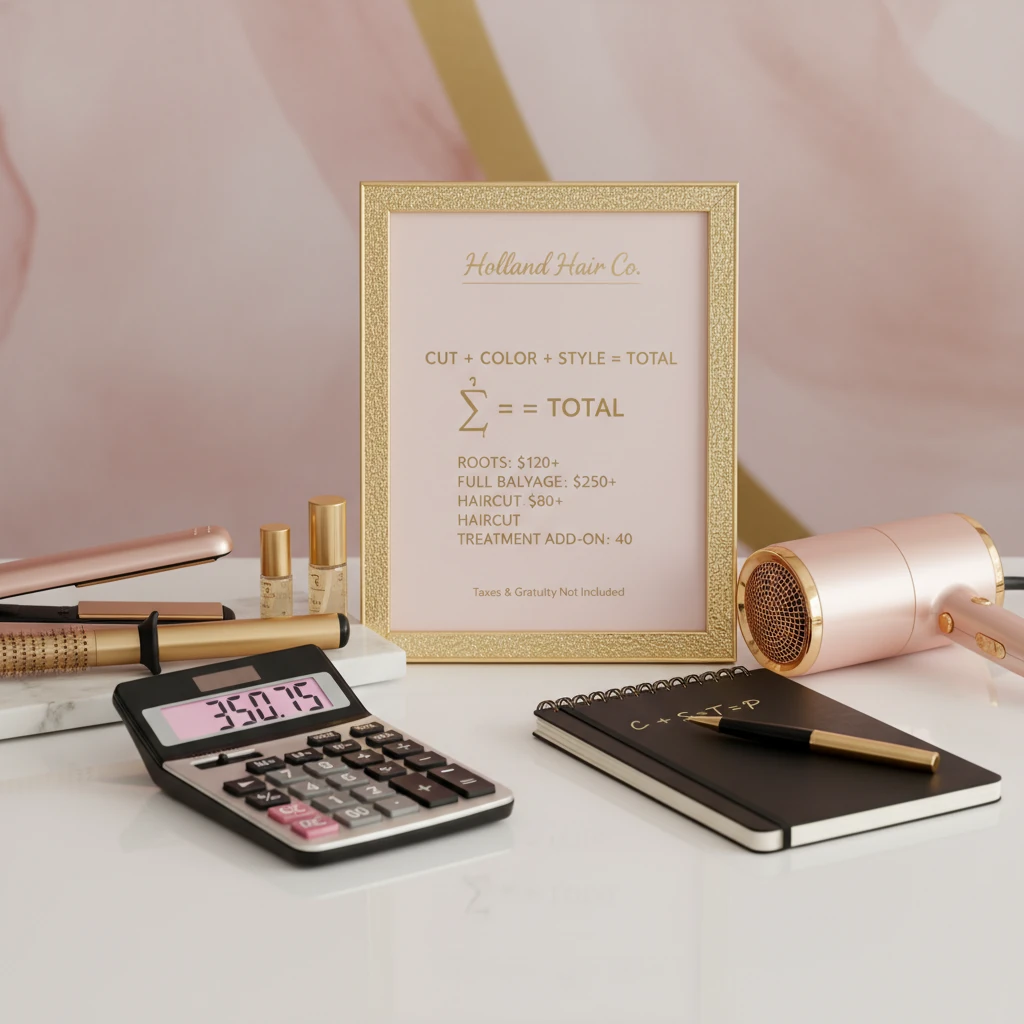
If imposter syndrome is keeping you from raising your prices by $20 per service -- just $20 -- and you see 5 clients per day, 4 days per week, that's $400 per week you're not charging. Over a month, that's $1,600. Over a year, that's $19,200 in revenue that stayed on the table because a voice in your head decided you hadn't earned it yet.
That's not a mindset problem in the abstract. That's a mortgage payment. A vacation. A business investment that could have changed your trajectory. Imposter syndrome has a real dollar amount, and most stylists have never done the math on what it's actually costing them.
The cost isn't only financial. There's an energy tax too.
Every appointment where you over-deliver beyond what you charged -- throwing in free services, spending unpaid time on extras, giving discounts you didn't need to give -- is energy that doesn't come back. Over time, that cumulative drain contributes to burnout. According to a 2021 survey by the Professional Beauty Association, burnout is one of the top three reasons stylists leave the industry within their first five years. A significant driver of that burnout is the chronic energy mismatch between what stylists give and what they allow themselves to receive.
There's also the cost of opportunities not taken. The educator you didn't approach at the trade show because you didn't feel legitimate enough. The brand collaboration you didn't apply for. The price increase you delayed for another year. The clients you let slide on boundaries because you didn't feel confident enough to hold them. Imposter syndrome doesn't just shrink your income -- it shrinks the entire scope of what you allow your business to become.
The stylists who scale their businesses and build something sustainable are not the ones who never doubt themselves. They're the ones who stopped letting doubt run the decisions.
How to Stop Letting Imposter Syndrome Make Your Business Decisions
This is not a 10-step guide to rewiring your psychology. It's a set of practical reframes that interrupt the pattern -- because hairstylist imposter syndrome is a pattern, and patterns can be interrupted.
Anchor your worth to your process, not your clients' emotional reactions.
Your clients' emotions about their hair are real and they matter -- but they are not an accurate measurement of your skill. A client who cries happy tears over a result you weren't even sure about isn't validating you by accident. And a client who's emotionally attached to an outcome that chemistry can't deliver doesn't mean you failed. The question that actually measures your performance is not "did she love it?" -- it's "did I give my best with what I know right now?"
That shift is significant. It moves your standard from a variable you can't control (your client's emotional response) to one you can (your preparation, technique, and professionalism). When your worth is anchored to your process, imposter syndrome has a much harder time building its case.
Build systems that remove the guesswork.
A huge portion of what feeds hairstylist imposter syndrome is ambiguity. You walk into every appointment wondering: will they like it? Did I charge enough? Should I have quoted more? What if they ask for something I'm not sure I can deliver?
Systems eliminate most of that ambiguity. Here's what a solid system looks like in practice:
- A consultation process that clarifies exactly what the client wants before you start
- A pricing structure that's written down so you're not doing mental math under pressure
- A set of written policies so you don't have to improvise boundaries in real time
- A rebook script so the conversation happens naturally at every appointment
When you have a system, you're not winging it. When you're not winging it, the voice that says you're a fraud has a lot less material to work with.
The Solo Stylist Society is built specifically around this: giving independent stylists the systems that make their business feel solid instead of fragile. Confidence isn't something you feel your way into -- it's something you build your way into, one repeatable structure at a time.
Start an evidence file and actually use it.
Every time a client says something positive, log it somewhere you can access it. Every rebook, every referral, every five-star review, every technique you nailed that stumped you six months ago. You are assembling a documented case file against imposter syndrome. When the voice gets loud -- and it will -- open the file and read what's actually true.
This isn't toxic positivity. It's correcting a data problem. Your brain is selectively collecting evidence for one side of an argument. The evidence file collects it for the other side.
Reread your reviews out loud.
Go to your Google profile right now and read 10 reviews out loud. People do not leave detailed, glowing five-star reviews out of pity. They leave them because you made them feel something real. Research from BrightLocal found that 88% of consumers trust online reviews as much as personal recommendations -- which means those reviews carry real social weight. If they describe your work, they are real proof. Treat them that way.
Audit your social media feed.
Unfollow every account that consistently makes you feel behind, less-than, or like you're failing a standard you didn't set. You can follow educators when you want to learn a specific skill. But a feed that triggers comparison instead of inspiration is actively making your imposter syndrome worse. This takes about 10 minutes and the relief is immediate.
When Imposter Syndrome Is Keeping Your Prices Too Low
Most stylists who haven't raised their prices in more than two years aren't holding back because the market won't bear it. They're holding back because they don't believe they're worth more. Imposter syndrome is making the pricing call -- and it's making the wrong one.
Here's how the cycle works: you charge a low price because you don't feel confident enough to charge more. Every time a client pays that price without question, your subconscious files it as confirmation of your ceiling. Then when you think about raising your rates, the voice says, "Who do you think you are?" -- and because you've been reinforcing the low price for years, it's a hard voice to argue with.
I charged $45 for a haircut for longer than I should have. I knew it wasn't enough. I knew my time was worth more, my product costs were real, and my skill had grown significantly since I set that number. But every time I thought about changing it, the voice said I hadn't earned the right yet. That voice cost me thousands of dollars.
Charging what you're actually worth is not about arrogance -- it's about accuracy. Your prices are supposed to reflect the real cost of your time, your skill, your overhead, and the experience you provide. When they don't, you are subsidizing your clients' appointments out of your own self-doubt.
If the idea of raising your rates makes you feel physically anxious, that anxiety is worth paying attention to -- not as proof that you shouldn't raise them, but as a clear signal that imposter syndrome has been running your pricing. Learning how to raise your prices without losing clients is a skill, not a character test. Approaching it from a place of clarity rather than fear changes the entire conversation.
The math is simple and worth repeating: a $20 increase across 5 services per day, 4 days per week adds up to $1,600 per month. Over a year, that's $19,200. Name it that clearly and it becomes very hard to keep tolerating.
Your prices are a business decision. Make them like one.
Frequently Asked Questions About Imposter Syndrome for Hairstylists
What profession has the most imposter syndrome?
High-achieving, visible, and client-facing professions report the highest rates of imposter syndrome -- including doctors, lawyers, creatives, and beauty professionals. Hairstylists are especially vulnerable because their work is immediately visible and subjectively judged, clients have strong emotional ties to their hair, and the industry lacks standardized measures of "good enough." That combination makes it easy to constantly question yourself even after years of successful work.
What are the 4 P's of imposter syndrome?
The 4 P's of imposter syndrome are Perfectionism (setting impossibly high standards), People-Pleasing (needing external validation to feel legitimate), Paralysis (avoiding challenges for fear of being exposed), and Procrastination (putting off goals because you don't feel ready). For hairstylists, all four show up regularly -- in refusing to raise prices until you're "good enough," over-delivering to avoid complaints, avoiding advanced education, or waiting until your books are full before taking your business seriously.
What are the 3 C's of imposter syndrome?
The 3 C's of imposter syndrome refer to Comparison (measuring yourself against others' highlight reels), Criticism (internalizing feedback as proof you don't belong), and Confidence gaps (the space between what you know and what you believe about yourself). Hairstylists scroll Instagram and see stylists who look fully booked and thriving -- and assume that's the standard they're failing to meet. The 3 C's explain why social media makes imposter syndrome significantly worse for creative professionals.
What is the fear of hairdressers called?
The fear of hairdressers -- or more specifically, the anxiety around going to a salon -- is sometimes called tonsurephobia, a specific phobia related to having one's hair cut. This is different from hairstylist imposter syndrome, which is the stylist's own fear that they are not skilled or legitimate enough in their profession. Both are real psychological experiences, but they affect opposite sides of the chair.
Is imposter syndrome more common for booth renters and independent stylists?
Yes -- independent stylists tend to experience imposter syndrome more intensely than employees. When you're on your own, there's no manager validating your work, no team to benchmark yourself against, and no salary that signals your worth. Every slow week feels like proof you don't belong. The business side of being a booth renter adds a whole second layer: most stylists were trained to do hair, not run a company, which makes the business gaps feel like personal failures rather than skill gaps that are completely normal and fixable.
How do I know if imposter syndrome is affecting my pricing?
If you've been charging the same rates for over a year even though your costs have gone up, if you feel physically anxious when you think about raising prices, or if your first instinct is "but am I really worth that?" -- imposter syndrome is running your pricing. The technical skill to do the work and the belief that you deserve to charge for it are two completely separate things. One you built in cosmetology school. The other most stylists have to deliberately develop on their own.
You are not a fraud. You have hairstylist imposter syndrome. There is a significant difference between those two things -- and understanding that difference is where it starts to lose its grip.
The stylists who build sustainable businesses aren't the ones who never doubt themselves. They're the ones who stopped letting doubt make the calls. Start there. Build the evidence file. Audit the feed. Do the pricing math. And when the voice gets loud, read what's actually true about your work.
The evidence is already there. You just have to start paying attention to it.
Frequently Asked Questions
What profession has the most imposter syndrome?
High-achieving, visible, and client-facing professions report the highest rates of imposter syndrome -- including doctors, lawyers, creatives, and beauty professionals. Hairstylists are especially vulnerable because their work is immediately visible and subjectively judged, clients have strong emotional ties to their hair, and the industry lacks standardized measures of 'good enough.' That combination makes it easy to constantly question yourself even after years of successful work.
What are the 4 P's of imposter syndrome?
The 4 P's of imposter syndrome are Perfectionism (setting impossibly high standards), People-Pleasing (needing external validation to feel legitimate), Paralysis (avoiding challenges for fear of being exposed), and Procrastination (putting off goals because you don't feel ready). For hairstylists, all four show up regularly -- in refusing to raise prices until you're 'good enough,' over-delivering to avoid complaints, avoiding advanced education, or waiting until your books are full before taking your business seriously.
What are the 3 C's of imposter syndrome?
The 3 C's of imposter syndrome refer to Comparison (measuring yourself against others' highlight reels), Criticism (internalizing feedback as proof you don't belong), and Confidence gaps (the space between what you know and what you believe about yourself). Hairstylists scroll Instagram and see stylists who look fully booked and thriving -- and assume that's the standard they're failing to meet. The 3 C's explain why social media makes imposter syndrome significantly worse for creative professionals.
What is the fear of hairdressers called?
The fear of hairdressers -- or more specifically, the anxiety around going to a salon -- is sometimes called tonsurephobia, a specific phobia related to having one's hair cut. This is different from hairstylist imposter syndrome, which is the stylist's own fear that they are not skilled or legitimate enough in their profession. Both are real psychological experiences, but they affect opposite sides of the chair.
Is imposter syndrome more common for booth renters and independent stylists?
Yes -- independent stylists tend to experience imposter syndrome more intensely than employees. When you're on your own, there's no manager validating your work, no team to benchmark yourself against, and no salary that signals your worth. Every slow week feels like proof you don't belong. The business side of being a booth renter adds a whole second layer: most stylists were trained to do hair, not run a company, which makes the business gaps feel like personal failures rather than skill gaps that are completely normal and fixable.
How do I know if imposter syndrome is affecting my pricing?
If you've been charging the same rates for over a year even though your costs have gone up, if you feel physically anxious when you think about raising prices, or if your first instinct is 'but am I really worth that?' -- imposter syndrome is running your pricing. The technical skill to do the work and the belief that you deserve to charge for it are two completely separate things. One you built in cosmetology school. The other most stylists have to deliberately develop on their own.
Read more about live the dream
Live the Dream for Solo Stylists